How to Get Into Bocconi as an International Student: Test Scores, Requirements, Fees and Deadlines for Undergraduates
한눈에 보기
- Selection formula: 55% standardised test score (SAT, ACT or Bocconi Online Test), 45% GPA from the third-last and second-last year of secondary school. No essays, no recommendation letters, no interview.
- Competitive SAT score: from 1480, ideally above 1500. Below 1450 is effectively a disqualifier, even with excellent grades. Last year’s applicants averaged around 1480.
- Places: approximately 3,000 for the 2027-28 intake, classes of around 115 students (80 for Global Law); up to 50 to 55% of places in English-taught programmes may be reserved for international applicants.
- Tuition fees: €17,000 per year (approx. $18,700) for the 2027-28 academic year; 1 in 3 students receives financial aid, with waivers from 20% to 100%.
- Application fee and deposit: €100 (approx. $110) non-refundable application fee; an enrolment deposit recently set at €3,400 (approx. $3,740), generally non-refundable.
- Deadlines (a.y. 2027-28): Early Session 2 to 29 September 2026; Winter Session 25 November 2026 to 26 January 2027. The entrance threshold is always lowest in the first round.
- Language of instruction: English for all BSc programmes except Economics and Management, and for Global Law; no TOEFL or IELTS needed at application stage.
- This article is for you if: you are a high school student outside Italy targeting a career in economics, finance, management, law or data science and want to know exactly what score, grades and budget Bocconi requires.
서론
Getting into Bocconi as an international undergraduate comes down to two numbers: your standardised test score and your school grades. Università Bocconi, Italy’s only university entirely devoted to the social sciences, does not read essays or recommendation letters for its Bachelor programmes. It ranks applicants on a purely quantitative formula, and the bar is high: a SAT score at Ivy League level, from 1480 and ideally above 1500, combined with very high grades.
This guide covers everything an international applicant needs for the 2027-28 intake: the programmes taught in English, the exact Bocconi admission requirements, the score you should aim for, the application steps on Apply2B, the two selection sessions, the real cost once financial aid is factored in, and what the €17,000 a year buys in terms of careers in Milan.
Bocconi vs. comparable European universities for undergraduates
| Bocconi (Milan) | LSE (London) | Erasmus University Rotterdam (Erasmus School of Economics) | IE University (Madrid/Segovia) | |
|---|---|---|---|---|
| QS World University Rankings 2027 (overall) | Not ranked in the overall table; 12th worldwide and 4th in Europe in Social Sciences & Management (QS by Subject 2026) | 62nd | 148th | 446th |
| Selectivity | Acceptance rate not published. About 3,000 places for 2027-28 | Around 34,000 applications for 1,900 places (2026 entry), roughly 18 applicants per place. BSc Economics: 2,885 applications for 217 places (2025) | Numerus fixus with selection: 700 places for the International Bachelor Economics and Business Economics, 461 first-year students enrolled | Acceptance rate not published; rolling admissions in rounds, earlier rounds have more capacity |
| Test or grades required | SAT, ACT or Bocconi Online Test (LSAT also accepted for Law); competitive SAT from 1480, ideally 1500+ | AAA to AAA at A-level (BSc Economics: AAA with A* in Maths, IB 39 with 766). US applicants: GPA 3.7 plus SAT 1450+ or ACT 32+, or five APs at grade 5 | Pre-university diploma equivalent to Dutch vwo; numerus fixus selection procedure, no SAT required | IE Global Admissions Test (or SAT/ACT), online assessment and interview |
| Annual tuition, international students | €17,000 (approx. $18,700), 2027-28 | £28,900 to £35,700 depending on programme (approx. $39,000 to $48,200), 2026/27, fixed for the duration of the degree | €13,500 (approx. $14,850) institutional fee for non-EEA students, 2026-27 | €29,000 (approx. $31,900) for the Bachelor in Business Administration, 2026-27, rising 2.9% a year |
| Class size | Around 115 students per class (80 for Global Law); 2,645 places in the Undergraduate School | About 1,900 undergraduate places a year across all programmes | 461 first-year students in the International Bachelor Economics and Business Economics | 미게재 |
| 유학생 | 53% of English-taught Bachelor students (2024-25) | Not published on admissions pages | Not published on programme pages | 75% of the student body, 130+ nationalities |
| Main application deadline | 29 September 2026 (Early Session), 26 January 2027 (Winter Session) | UCAS, 13 January 2027 | 15 January 2027 (numerus fixus) | Rolling, in rounds |
Sources: Università Bocconi admissions pages; LSE admissions information, BSc Economics programme page, information for US students and 2026/27 table of fees; Erasmus University Rotterdam programme facts and figures and 2026-2027 tuition fee page; IE University tuition fees and programme pages; QS World University Rankings 2027 (published June 2026) and QS World University Rankings by Subject 2026. All consulted September 2026. Currency conversions at €1 = $1.10 and £1 = $1.35, September 2026.
What Is Bocconi’s Acceptance Rate for International Students?
Bocconi does not publish an official acceptance rate for its undergraduate programmes, and no figure for the number of applications received appears on its admissions pages. What the university does publish is the number of places: approximately 3,000 for the 2027-28 academic year across the Undergraduate School, the Law School and the partner programmes, with most Bachelor programmes organised into classes of around 115 students and 80 places per class for Global Law. For programmes taught in English, up to 50 to 55% of places may be reserved for international applicants.
| Programme (a.y. 2027-28) | Places | 언어 |
|---|---|---|
| Management | 1,380 | English or Italian |
| Finance | 460 | 영어 |
| Management for the Arts and Cultures | 230 | 영어 |
| Management and Computer Science | 230 | 영어 |
| Economics | 115 | 영어 |
| Mathematical and Computing Sciences for Artificial Intelligence | 115 | 영어 |
| International Politics and Government | 115 | 영어 |
| Law (five-year integrated master’s) | 240 | Italian |
| Global Law | 80 | 영어 |
| World Bachelor in Business (with USC and HKUST) | 45 | 영어 |
| HEC Paris Double Degree | 110 | 영어 |
| Total | Approx. 3,000 (2,645 Undergraduate School, 320 Law School, 155 partner programmes) |
Source: Università Bocconi, Bachelor and Law programmes admissions page, consulted September 2026.
The absence of a published rate does not mean the selection is soft. Because the ranking is entirely quantitative, the bar is visible in the scores of admitted students, and it is high. Your grades must be very high, and your SAT needs to be at Ivy League level: from 1480, and ideally above 1500. Even with an excellent transcript, a score below 1450 is basically a disqualifier. Last year’s applicant pool averaged around 1480, which tells you that a “good” SAT by most standards is only the entry ticket here.
One structural detail matters as much as the score itself. The entrance threshold is always lowest in the first round. Applying in the Early Session, when the full quota of places is still open, gives you a measurably better chance than applying in the Winter Session for the remaining seats. Where Bocconi sits among the best universities in Italy for international undergraduate students is worth checking before you apply.
Which Undergraduate Programmes Does Bocconi Offer in English?
Bocconi offers a range of Bachelor of Science programmes through its Undergraduate School, alongside Law and Global Law through its Law School. The BSc programmes currently on offer include Management (available in both English and Italian), Finance, Economics, Management and Computer Science, Mathematical and Computing Sciences for Artificial Intelligence, Management for the Arts and Cultures, and International Politics and Government. All of these are taught in English, except for the Economics and Management programme, which is offered in Italian. On the law side, the Bachelor in Global Law is taught in English, while the five-year integrated Law degree is conducted in Italian.
Whether you lean toward quantitative fields like finance and data science, or toward more policy-oriented subjects like international politics, there is a programme designed around your interests. Most BSc programmes last three years. The World Bachelor in Business is an exception: a four-year programme developed in partnership with USC (University of Southern California) and HKUST (The Hong Kong University of Science and Technology), with a specific admissions procedure and dedicated fees. Bocconi also lists 110 places in a Double Degree with HEC Paris among its partner programmes for 2027-28, and anyone considering that route should also look at how to get into HEC Paris.
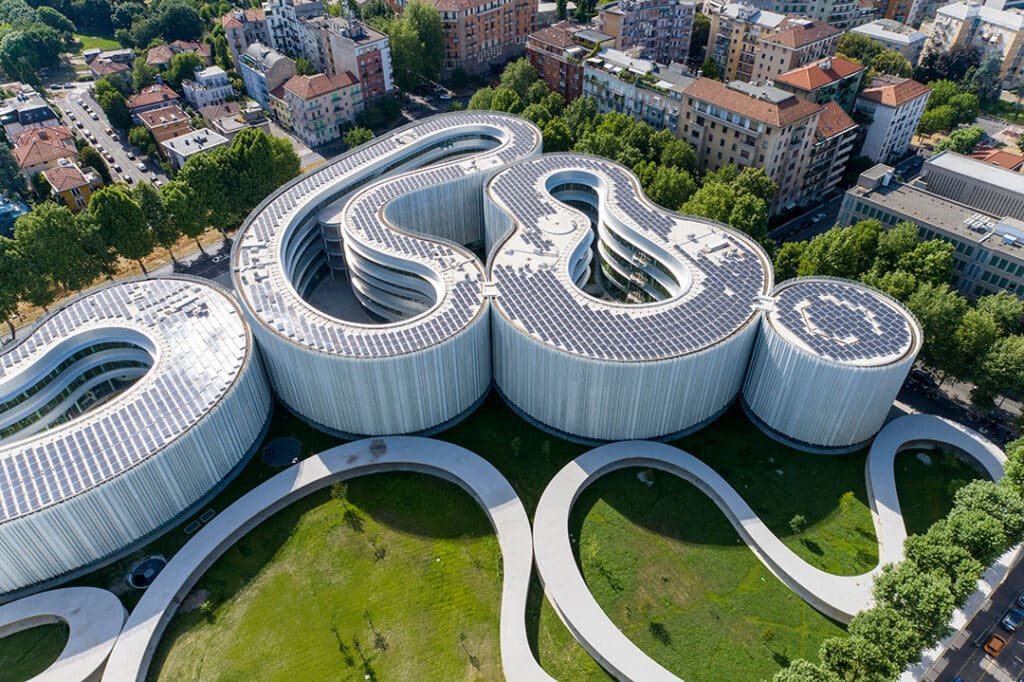
Founded in 1902 in the heart of Milan, Bocconi is a private, non-profit research university focused exclusively on economics, management, finance, law, political science and data science. Its campus, partly redesigned by the Pritzker Prize-winning Irish firm Grafton Architects, sits in a lively residential district just south of the city centre. According to its official website, it holds 12th place worldwide and 4th in Europe in Social Sciences & Management in the QS World University Rankings by Subject 2026. Students from over 100 countries study there, and 53% of students enrolled in English-taught Bachelor programmes are international (data from 2024-25). That diversity is intentional, and it shows in the classroom from day one. If you are also weighing a master’s later on, our guide on how to get into Bocconi for a master’s covers the postgraduate route.
✦ MY ELITE 도구 상자
MY ELITE와 함께 한 단계 더 나아가세요

합격 가능성 예측
에 합격할 확률은 어느 정도인가요?

나에게 딱 맞는 제품을 찾아보세요
5분 만에 끝나는 진로
지도 테스트를 해보세요

자기소개서 작성 도우미
와 지원 를 돋보이게 하기 위해 AI가 제작했습니다.

이력서 작성 도구
귀하의 목표 학교에 맞춰 제작된 전문 템플릿
Bocconi Admission Requirements for International Students
One of the most striking features of Bocconi’s admission requirements at the undergraduate level is their simplicity. Unlike many universities that factor in personal essays, teacher recommendations and extracurricular activities, Bocconi evaluates BSc applicants on two elements only.
The selection is based on your standardised test score, which carries a weight of 55%, and your GPA from the third-last and second-last year of secondary school, which accounts for the remaining 45%. Recommendation letters, motivational essays, CVs and résumés play no role in the assessment. The evaluation is entirely quantitative, which means your preparation has a direct, measurable effect on your outcome. In practice, both components need to be strong: very high grades and an Ivy League level SAT, from 1480 and ideally above 1500.
✦ MY ELITE 도구 상자
MY ELITE와 함께 한 단계 더 나아가세요
합격 가능성 예측
에 합격할 확률은 어느 정도인가요?
나에게 딱 맞는 제품을 찾아보세요
5분 만에 끝나는 진로
지도 테스트를 해보세요
자기소개서 작성 도우미
와 지원 를 돋보이게 하기 위해 AI가 제작했습니다.
이력서 작성 도구
귀하의 목표 학교에 맞춰 제작된 전문 템플릿
Diploma eligibility by country of education
For international students, there is one additional layer to get right before anything else: your secondary school diploma must meet Bocconi’s eligibility conditions. The general rule is a diploma awarded after at least 12 years of education counted from the first year of primary school, and, for non-EU systems, at least two full years of attendance in the system that issued the diploma. The requirements then vary by country and sometimes call for supplementary elements such as a Declaration of Value, or a minimum number of Advanced Placement (AP) exams or A-Levels on top of the diploma itself. Profiles whose diploma does not meet the necessary requirements will not be considered for admission, so checking this well in advance is essential.
| Country or system of education | Condition stated by Bocconi | Deadline to provide proof |
|---|---|---|
| United States (high school diploma) | At least 3 AP exams with a minimum grade of 3 out of 5, sent electronically through the College Board (Bocconi DI code 7206). Without APs: at least 1 year of university with all exams passed | July |
| United Kingdom (A-Levels) | At least 3 subjects at A-Level or Pre-U; Critical Thinking and General Studies not accepted. Scotland: 3 Advanced Highers, or 2 Advanced Highers plus at least 4 Highers | End of August |
| 국제 바칼로레아 | IB Diploma with at least 24 points in six subjects, 12 of them at Higher Level, plus TOK, CAS and Extended Essay passed; 13 years of schooling for most IB students | May session |
| French baccalauréat | Final Relevé des Notes du Baccalauréat, in the original language | End of July |
| European Baccalaureate, Turkish and Vietnamese diplomas | Diploma plus complete final-year transcript, with official English or Italian translation; Turkish applicants also need the YKS (TYT and AYT) passed in the year of graduation | See official page |
| Diplomas awarded after 11 or 10 years of schooling | Must be topped up with 1 year (11-year diplomas) or 2 years (10-year diplomas) of university with all exams passed, or a foundation course; these years do not count toward credit recognition | Before enrolment |
| Non-EU citizens, all systems | CIMEA Statements of Comparability and Verification may be compulsory; a Declaration of Value issued by the Italian consulate is accepted as an alternative | Before enrolment |
Source: Università Bocconi, Secondary school diplomas and Specific diploma requirements pages, consulted September 2026. German, Indian, Chinese and Canadian systems are not listed separately by Bocconi and fall under the general 12-year rule.
It is also worth knowing that non-Italian applicants who are not residents in Italy and who will be under 17 as of 1 September 2027 cannot be considered for admission. Those who will be between 17 and 18 at that date will be required to appoint a guardian until they reach 18. Both conditions are stated on the official Bocconi admissions page. Non-EU students who are admitted then follow the Italian national procedure for applying to Italian universities through Universitaly.
What SAT Score Do You Need for Bocconi?
The selection test represents 55% of your total score, which makes it the single most important variable you can control. Bocconi accepts three tests for its BSc programmes: the Bocconi Online Test, the SAT and the ACT. Law School programmes additionally accept the LSAT and the Bocconi Online Test for Law. If you have more than one result, you can upload all your score reports and the portal will automatically select the highest for your ranking. You can even submit both a SAT and a Bocconi test score in the same round, which gives you two shots at the 55%.
On the SAT specifically, the numbers are unambiguous. A competitive score starts at 1480 and ideally sits above 1500. A score below 1450 is basically a disqualifier, whatever your transcript looks like. Last year’s applicants averaged around 1480. Plan accordingly: it is more than strongly recommended to prepare for and sit the SAT in Grade 11, because you may need to take it two or three times to reach your target before the application deadlines. A strong result can decisively outweigh a mid-range GPA; a weak one cannot be compensated.
Choosing between the SAT and the Bocconi Online Test is a strategic decision, and four points should guide it. First, there is far less preparation material available online for the Bocconi test, and a great deal for the SAT: the College Board, which runs the SAT, offers two free official resources that have no equivalent for the Bocconi test. Official Digital SAT Prep on Khan Academy provides lessons, quizzes and a personalised study plan built on your own practice results, and the Bluebook app, the platform on which the digital SAT is actually taken on test day, includes free full-length official practice tests in the exact format of the exam. Together they give SAT candidates a level of preparation the Bocconi test simply does not offer. For the format, scoring and timeline of the SAT alongside the other tests top universities require, see our guide to standardised admission tests, including the SAT. Second, the Bocconi test is aligned with the Italian secondary school curriculum, so you may have to self-study topics that your own high school never covered. Third, because you can submit both scores in the same round, sitting the Bocconi test as a complement to a SAT already in hand costs you little. Fourth, whichever test you choose, book early: the Bocconi Online Test for international candidates can be booked from 13 July 2026 to 19 January 2027 on the dedicated platform.
Does Bocconi Require IELTS or TOEFL?
The vast majority of Bocconi BSc programmes are taught in English, but the language requirements work differently from what you might expect. You do not need to submit a TOEFL or IELTS score to apply. The English requirement is assessed at the enrolment stage, not the application stage.
In practice, if you receive an offer, you will need to demonstrate English proficiency through one of the certificates or diplomas on the official acceptance list before you can finalise your enrolment. The exact list of accepted certificates is published on the official Bocconi admissions pages and is worth checking early, since most admitted students will need to have a test booked by the time results come out. If you are deciding which certificate to take, our comparison of the GMAT, GRE, TOEFL and IELTS explains the differences between TOEFL and IELTS.
One programme deviates from this in the Undergraduate School: Economics and Management is taught entirely in Italian. On the Law side, the Bachelor in Global Law is in English, while the five-year integrated Law degree is conducted in Italian. The vast majority of international applicants target English-taught programmes and will not be affected by this distinction.
One practical piece of advice: Milan is a city where Italian is the language of everyday life outside the university. Your coursework will be entirely in English, but learning even basic Italian before you arrive will make a meaningful difference to your experience of the city.
How to Apply to Bocconi: Step by Step
The application process at Bocconi is streamlined, but it has a specific sequence that you need to follow correctly. Here is how it works.
Step 1: Take your selection test (Grade 11 to autumn of Grade 12). You cannot open a Bocconi application without a test score already in hand. The accepted tests for BSc programmes are the Bocconi Online Test, the SAT and the ACT. Law School programmes additionally accept the LSAT and the Bocconi Online Test for Law. The Bocconi Online Test for international candidates can be booked from 13 July 2026 to 19 January 2027. If you have more than one test result, upload all your score reports: the portal automatically selects the highest, and you may submit both a SAT and a Bocconi test score in the same round.
Step 2: Confirm your applicant category (before the session opens). Bocconi distinguishes between Italian, international and transfer applicants, and the procedures differ between these groups. Check the official website to confirm which category applies to you before you proceed.
Step 3: Submit your application on Apply2B (2 to 29 September 2026, or 25 November 2026 to 26 January 2027). Once you have a score, you complete and submit your application through Apply2B, Bocconi’s dedicated admissions portal. You can indicate up to 4 preferences for programmes of the Undergraduate School and up to 2 preferences for programmes of the Law School. If you want to be considered for both schools, you need to submit two separate applications, each with its own €100 (approx. $110) fee.
Step 4: Upload your documents (before the session deadline, 3:00pm Italian time). All documents must be submitted through the online portal. Documents sent via email or postal mail will not be taken into consideration. Make sure everything is legible and complete before you submit.
Step 5: Wait for results and act quickly (mid-November 2026 or mid-March 2027). Admission outcomes are posted directly to your applicant portal. Check it on the expected results date. Once admitted, you have approximately three weeks to confirm your place through the online enrolment procedure, which involves paying a deposit. The deposit may vary from year to year but was recently set at €3,400 (approx. $3,740). It is generally non-refundable once paid, except under specific exceptional circumstances such as a visa denial or an official withdrawal within strict initial deadlines, in which case a €250 (approx. $275) administrative fee is retained. In case of non-admission, you can still apply in the subsequent round.
What Documents Do You Need to Apply to Bocconi?
The list of required documents for BSc applicants is short. According to the official admissions page, you will need to provide:
- ID or passport (passport required for non-EU applicants)
- Parents’ ID or passport if you are under 18
- Transcripts from your third-last and second-last year of secondary school
- At least one test score report (Bocconi Online Test, SAT or ACT)
Within the application, you will need to provide your final GPA or list all your grades, excluding physical education, behaviour and religion, and use the calculator available within the portal to generate your GPA on a scale of ten.
Bocconi Application Deadlines 2026-2027
For the 2027-28 academic year, Bocconi offers two selection sessions for international applicants.
| Session | Application window | Closes at | Results | Test booking (Bocconi Online Test) |
|---|---|---|---|---|
| Early Session (round 1) | 2 to 29 September 2026 | 3:00pm Italian time | Mid-November 2026 | From 13 July 2026 |
| Winter Session (round 2) | 25 November 2026 to 26 January 2027 | 3:00pm Italian time | Mid-March 2027 | Until 19 January 2027 |
Applying in the Early Session is strongly recommended, for three concrete reasons. The entrance threshold is always lowest in round 1: the full quota of places is open, and the score needed to secure one rises in the Winter Session as remaining seats shrink. Early applicants also have better access to scholarship funding before it is allocated, and more time to manage their student visa process. For non-EU applicants, Italian consular procedures take time, and a late admission result can leave very little room before the September start. In case of non-admission in the Early Session, you can still apply in the Winter Session.
One important detail: even if you have already taken a selection test, you are not automatically entered into a selection session. It is your responsibility to submit your application before the deadline and to upload your test score yourself, as scores are not automatically acquired from the testing platform.
How Much Does Bocconi Cost for International Students?
Bocconi is a private institution, and its tuition fees reflect that. For the 2027-28 academic year, the annual cost for first-year BSc and Law students is approximately €17,000 (approx. $18,700). Over a three-year BSc, that is €51,000 (approx. $56,100) in tuition alone. This figure covers academic tuition only and does not include housing, food, transport or personal expenses. Milan is an expensive city by Italian standards, so planning your full budget carefully is important.
| 비용 항목 | 금액 | 참고 사항 |
|---|---|---|
| 지원 수수료 | €100 (approx. $110) | Non-refundable; one fee per school (Undergraduate School, Law School) |
| Enrolment deposit | Recently €3,400 (approx. $3,740) | May vary by year; generally non-refundable except visa denial or official withdrawal within strict deadlines (€250 fee retained) |
| Tuition, first year | €17,000 (approx. $18,700) | A.y. 2027-28; before any waiver |
| Tuition, three-year BSc | €51,000 (approx. $56,100) | Before any waiver |
| Housing in Milan (Bocconi estimate) | €600 to €1,100 per month for a private single room (approx. $660 to $1,210), €500 to €750 for a double room, €800 to €1,800 for a flat | €7,200 to €13,200 a year for a single room, before food and personal expenses |
| Food and transport (Bocconi estimate) | €5 per meal at the university canteen, €10 to €20 for a café lunch; public transport pass €22 per month for students under 27 | Bocconi does not publish an all-in annual total and notes that estimates vary with lifestyle |
Currency conversions at €1 = $1.10, September 2026. Living cost estimates: Università Bocconi, Estimated costs page, consulted September 2026.
The listed tuition, however, is not necessarily what you will pay. Bocconi runs a need-based financial aid programme called Bocconi4Access to Education, and the numbers behind it are significant: the university contributes €55 million (approx. $60.5 million) in funding, and 1 in 3 students receives some form of financial aid (data from 2024-25). Waivers range from 20% to a full 100% of tuition, depending on your family’s financial situation. The funding tiers include full tuition waivers at 100%, and partial waivers at 80% and 60% through the Bocconi Access to Education Scholarships, and 40% and 20% reductions through the Boost Your Future Scholarships. A student with the highest level of financial need could, in practice, study at Bocconi tuition-free.
Bocconi also offers a Women Award for women admitted to specific programmes, and ISU Bocconi Scholarships for enrolled students. Loan opportunities are available for EU and US citizens, including FAFSA for American students. For the full and current list of funding options, visit the official funding pages at unibocconi.it. For strategies that apply beyond Bocconi, see our guide to studying abroad without breaking the bank.
Financial aid must be applied for separately from your admission application. Apply as soon as the window opens after admission, as budgets are allocated on a rolling basis.
On the housing side, Bocconi offers approximately 2,800 accommodation places across 9 residence halls, either university-owned or affiliated, located on and near campus. All rooms are single, sometimes within shared apartments, with weekly cleaning and 24/7 reception. Housing applications are submitted after enrolment, so plan ahead.
How to Stand Out in Bocconi Admissions
Because the selection is purely quantitative, “standing out” at Bocconi means maximising two numbers and avoiding administrative mistakes. Here is where applicants win or lose.
Test preparation is the highest-return investment. The test is 55% of your score, and the SAT bar is from 1480, ideally above 1500, with anything under 1450 effectively out. Start in Grade 11, plan for two or three sittings, and use the College Board’s free official resources: Official Digital SAT Prep on Khan Academy for lessons and a study plan, and the Bluebook app for full-length practice tests in the real exam format. If you also sit the Bocconi Online Test, remember it follows the Italian curriculum and may require self-study of unfamiliar topics, and that far less preparation material exists for it online. Submitting both scores in the same round lets the portal pick your best.
Grades are the other 45%, and they must be very high. Bocconi looks at your third-last and second-last year, so the grades that count are already largely set by the time you apply. If you are reading this in Grade 10 or 11, every mark from now on goes into the calculation.
Diploma requirements are worth verifying well in advance, since international applicants are sometimes caught off guard by country-specific conditions. Depending on where you studied, your diploma may require a Declaration of Value or CIMEA statement, at least three AP exams (grade 3 or above) for US applicants, at least three A-Levels for UK applicants, or other documentation. Profiles that do not meet these requirements will not be considered for admission. Check the official Bocconi requirements for your country of education several months before the application opens.
The Early Session is worth targeting, since the practical benefits are concrete: the lowest entrance threshold of the year, fuller scholarship budgets, a more comfortable visa timeline, and the option to reapply in the Winter Session if needed. There is no downside to going early.
It’s worth checking your Apply2B portal rather than your inbox, since Bocconi posts admission decisions directly there. Log in on the expected results date, and once you see an offer, you have roughly three weeks to confirm your place and pay the deposit, so have the funds ready and be prepared to act immediately.
Financial aid is worth applying for as soon as you are admitted, since many families assume the €17,000 figure is what they will pay, and it often is not. With 1 in 3 students receiving aid and €55 million committed by the university, the programme is substantial. Apply as soon as the funding window opens.
What Happens After Bocconi: Careers and Milan
Milan itself is worth taking seriously as part of the decision, since the city hosts more than 5,000 multinational companies, making it one of Europe’s most concentrated environments for graduates in finance, management and law. Students who engage with the city alongside their studies consistently leave with stronger professional foundations.
For a Bachelor graduate, the first outcome to plan for is not a job but a master’s. Bocconi’s own graduate surveys show that the large majority of BSc graduates continue their studies: in International Politics and Government, for instance, 89.3% of the class surveyed one year after graduation had enrolled in a programme lasting nine months or more (2023 graduate satisfaction survey). The employment data Bocconi publishes therefore concerns its master’s graduates: 94.7% are employed one year after graduation and 36% of them work abroad. The Career Service reports 740+ employers meeting students and graduates, 16 career fairs in Italy and abroad with 700+ participating companies, and 9,300+ internship and job opportunities posted in 2025.
If a master’s is your plan, compare the Italian route with how to get into HEC Paris and other French grande école entries, and see how Italian institutions rank overall in our breakdown of the QS World University Rankings 2027.
자주 묻는 질문
Yes, by score if not by published rate. Bocconi does not release an acceptance rate, but its purely quantitative selection sets a high bar: very high school grades plus a SAT from 1480, ideally above 1500, with scores below 1450 effectively disqualifying. Around 3,000 places are available for 2027-28, and up to 50 to 55% of places in English-taught programmes may go to international applicants. Applying in round 1 improves your odds.
Bocconi does not publish a minimum GPA, but your grades from the third-last and second-last year of secondary school count for 45% of your ranking score, and they need to be very high. Grades are converted to a ten-point scale using the calculator inside Apply2B, excluding physical education, behaviour and religion. A strong test score can partly offset a mid-range GPA, but not the reverse.
Yes. You can upload several score reports, and you can even submit both a SAT and a Bocconi test score in the same selection round. The portal automatically selects the highest for your ranking. Given that far more preparation material exists for the SAT, most international applicants build their strategy around the SAT and treat the Bocconi test, which follows the Italian curriculum, as a complement.
No. You do not need an English language certificate to submit your application. English proficiency is checked at the enrolment stage: if you receive an offer, you must present one of the certificates or diplomas on Bocconi’s official acceptance list before finalising your enrolment. Check the list early so that your test is booked by the time results are published, in mid-November or mid-March.
Generally not. The deposit, recently set at €3,400 (approx. $3,740), may vary from year to year and is due within roughly three weeks of admission to confirm your place. Refunds are only granted under specific exceptional circumstances, such as a visa denial or an official withdrawal within strict initial deadlines, and a €250 (approx. $275) administrative fee is retained in those cases.
Tuition is €17,000 (approx. $18,700) per year for 2027-28, so €51,000 (approx. $56,100) over a three-year BSc before any waiver. One in three students receives need-based aid through Bocconi4Access to Education, with waivers from 20% to 100%, so the real figure can be far lower. Add the €100 application fee, the €3,400 deposit and living costs in Milan, which is expensive by Italian standards.
✦ MY ELITE 도구 상자
MY ELITE와 함께 한 단계 더 나아가세요
합격 가능성 예측
에 합격할 확률은 어느 정도인가요?
나에게 딱 맞는 제품을 찾아보세요
5분 만에 끝나는 진로
지도 테스트를 해보세요
자기소개서 작성 도우미
와 지원 를 돋보이게 하기 위해 AI가 제작했습니다.
이력서 작성 도구
귀하의 목표 학교에 맞춰 제작된 전문 템플릿